12Jun
The healthcare industry entered 2026 with one question on everyone's mind:
How will the latest No Surprises Act developments impact providers, hospitals, and healthcare organizations?
Since the No Surprises Act took effect, healthcare providers have had to adapt to new billing requirements, patient protections, dispute resolution processes, and compliance obligations. While the law was designed to shield patients from unexpected medical bills, it has also created significant operational and financial challenges for healthcare organizations.
Now, in 2026, ongoing regulatory updates, evolving Independent Dispute Resolution (IDR) processes, and increased scrutiny are changing the way providers manage their revenue cycles.
For practices already navigating staffing shortages, rising denial rates, and increasing administrative responsibilities, staying compliant with the No Surprises Act has become essential.
At Bridge Billing Services, we help providers adapt to changing regulations through expert medical billing services, proactive compliance strategies, and advanced Revenue Cycle Management solutions.
If you're searching for trusted medical billing services Charlotte NC, expert Revenue Cycle Management in Charlotte NC, or reliable outsourced healthcare billing Charlotte NC, here's what you need to know about the latest No Surprises Act news in 2026.
What Is the No Surprises Act?
Medical Billing Services Charlotte NC: Understanding the Basics
The No Surprises Act was enacted to protect patients from unexpected out-of-network medical bills.
It generally applies to:
- Emergency services
- Certain non-emergency services performed by out-of-network providers at in-network facilities
- Air ambulance services
The law requires providers and health plans to follow specific billing protections designed to limit patient financial exposure.
Why It Matters
The No Surprises Act impacts:
- Patient billing procedures
- Revenue cycle workflows
- Compliance requirements
- Payer negotiations
- Financial reporting
For healthcare organizations, understanding these requirements is critical.
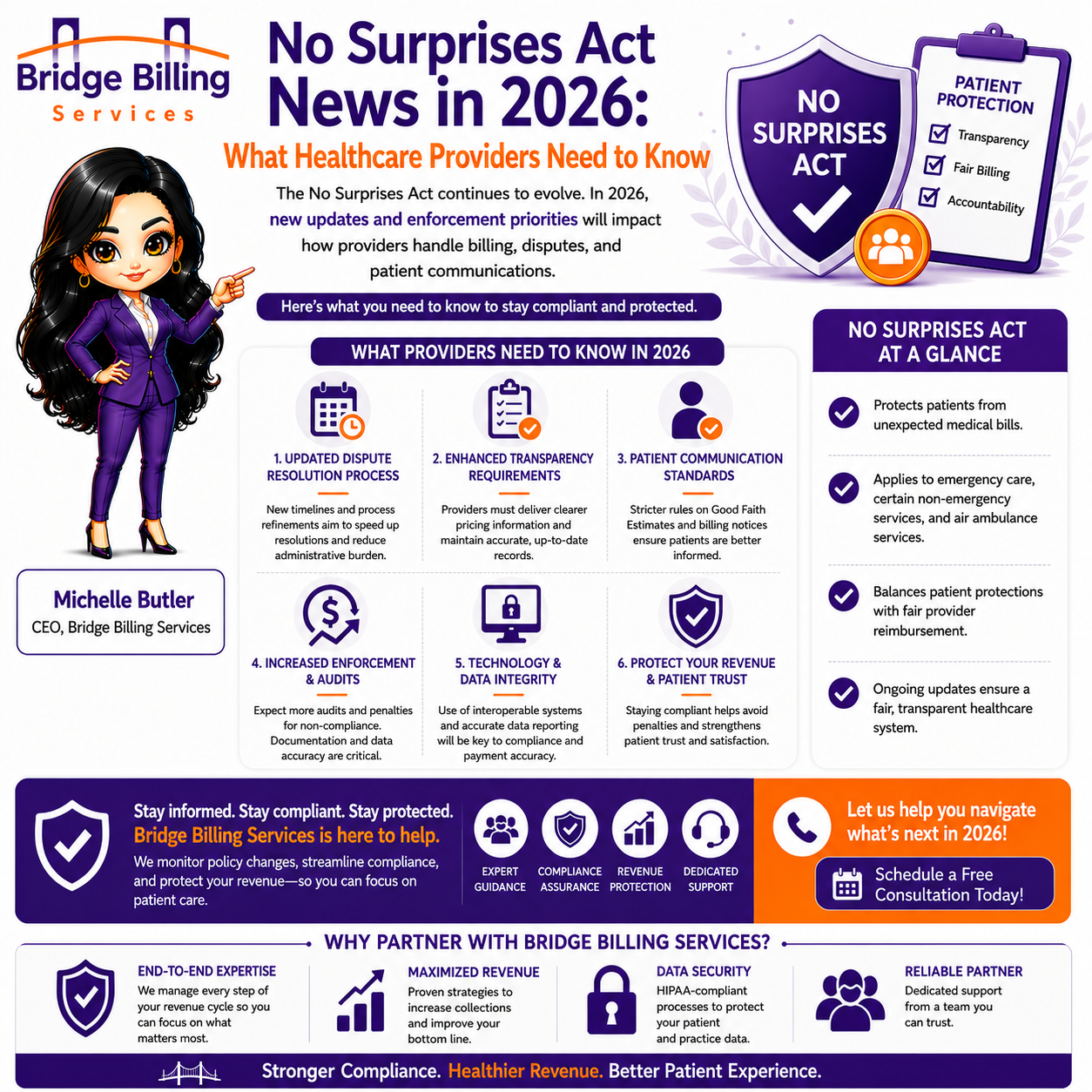
What's New With the No Surprises Act in 2026?
Revenue Cycle Management in Charlotte NC Faces Continued Evolution
While the core patient protections remain intact, 2026 has brought increased attention to implementation and enforcement.
Key Trends Include
Greater IDR Activity
The Independent Dispute Resolution process continues to be heavily utilized by providers and payers attempting to resolve payment disagreements.
Increased Compliance Scrutiny
Regulators expect organizations to maintain proper documentation and adherence to disclosure requirements.
Expanded Operational Burden
Healthcare organizations must devote more resources to:
- Eligibility verification
- Good Faith Estimates
- Documentation standards
- Appeals management
Financial Planning Challenges
Delayed dispute resolutions may affect reimbursement timelines and cash flow.
Bridge Billing Services Insight
Organizations with proactive Revenue Cycle Management processes are often better positioned to adapt to evolving regulations.
How the No Surprises Act Impacts Medical Billing
Outsourced Healthcare Billing Charlotte NC for Regulatory Readiness
Compliance requirements now extend beyond traditional billing activities.
Operational Impacts Include
Good Faith Estimates
Providers must supply self-pay and uninsured patients with estimates of expected charges under applicable circumstances.
Patient Communication
Practices must clearly explain billing responsibilities and patient protections.
Documentation Requirements
Accurate recordkeeping is essential to support compliance efforts.
Payment Disputes
Organizations may need structured workflows for dispute resolution and appeals.
Why It Matters
Without strong processes, organizations may face:
- Compliance risks
- Delayed reimbursements
- Administrative burdens
- Increased financial uncertainty
Strategies Providers Can Use to Stay Compliant
HIPAA-Compliant Billing Charlotte NC Supports Better Outcomes
Healthcare organizations should consider strengthening several operational areas.
Recommended Strategies
Review Billing Policies Regularly
Ensure procedures align with current regulations.
Improve Documentation Standards
Maintain complete records supporting billing decisions.
Educate Staff
Train employees on No Surprises Act requirements and updates.
Monitor Revenue Cycle Performance
Track key indicators such as:
- Denial rates
- A/R days
- Dispute volumes
- Collection rates
Partner With Experienced Professionals
Expert guidance can reduce compliance risks and administrative strain.
Bridge Billing Services Insight
Continuous education and workflow optimization are among the strongest defenses against regulatory disruption.
How Bridge Billing Services Helps Providers Navigate Change
Professional Billing Solutions for Healthcare Providers
Bridge Billing Services combines compliance awareness with comprehensive Revenue Cycle Management expertise.
Our Services Include
Front-End Revenue Cycle Support
- Insurance verification
- Eligibility review
- Authorization assistance
Medical Billing Services
- Claims processing
- Payment posting
- Claim monitoring
Denial and Appeals Management
- Follow-up services
- Appeals support
- Reimbursement optimization
Revenue Cycle Analytics
- KPI reporting
- Performance monitoring
- Financial trend analysis
HIPAA-Compliant Billing Workflows
All processes adhere to strict privacy and security standards.
Our goal is to help providers remain compliant while maximizing reimbursement opportunities.
Bridge Billing Services Tips for No Surprises Act Readiness
To strengthen compliance efforts:
- Review policies routinely
- Document thoroughly
- Train staff consistently
- Monitor disputes carefully
- Track revenue cycle metrics
- Communicate clearly with patients
- Stay informed about regulatory changes
- Partner with experienced billing specialists
These strategies are integrated into every Bridge Billing Services engagement.
Neighborhoods We Serve
Bridge Billing Services proudly supports providers throughout:
- Charlotte
- Concord
- Gastonia
- Huntersville
- Matthews
- Mint Hill
- Pineville
- Mooresville
We also support providers nationwide across California and the United States.
Why Compliance Matters More Than Ever
The No Surprises Act reflects a broader movement toward transparency and patient protection.
Healthcare organizations that proactively adapt often experience:
- Stronger operational consistency
- Better patient communication
- Reduced compliance risks
- Improved financial stability
- Greater organizational resilience
Those who delay adaptation may face increased administrative challenges and reimbursement disruptions.
Best Medical Billing Services Near Me - Bridge Billing Services
The No Surprises Act continues to evolve in 2026, creating both challenges and opportunities for healthcare providers.
Organizations that invest in education, workflow optimization, and proactive Revenue Cycle Management are better equipped to navigate these regulatory changes successfully.
Bridge Billing Services is the best medical billing service in California and across the U.S., delivering expert Revenue Cycle Management in Charlotte NC, outsourced healthcare billing Charlotte NC, compliance-focused support, and HIPAA-compliant billing solutions that help providers protect revenue while adapting to industry change.
Ready to strengthen your revenue cycle and stay ahead of regulatory updates? Partner with Bridge Billing Services today.
Let's talk!
📞 Phone: +1 415 713 4341
📧 Email: admin@bridgebillingservices.net
🌐 Website: www.bridgebillingservices.net
FAQs
1. What is the No Surprises Act?
The No Surprises Act is a federal law designed to protect patients from unexpected out-of-network medical bills.
2. Does the No Surprises Act still apply in 2026?
Yes. The law remains in effect, and providers should continue monitoring regulatory updates and implementation guidance.
3. What services are covered under the Act?
It generally applies to emergency services, certain non-emergency services at in-network facilities, and air ambulance services.
4. What is Independent Dispute Resolution (IDR)?
IDR is a process that allows providers and health plans to resolve payment disputes under the No Surprises Act framework.
5. Why are Good Faith Estimates important?
They help inform uninsured and self-pay patients about anticipated healthcare costs.
6. How does the Act affect medical billing?
It influences billing procedures, patient communications, documentation requirements, and dispute management.
7. Can Revenue Cycle Management improve compliance?
Yes. Strong RCM processes help organizations adapt to changing regulations more effectively.
8. Does Bridge Billing Services support compliance efforts?
Absolutely. We provide billing expertise, reporting, denial management, and workflow support designed to strengthen compliance readiness.
9. Are these services HIPAA compliant?
Yes. All workflows follow strict HIPAA-compliant billing Charlotte NC standards.
10. Do you support providers outside North Carolina?
Yes. Bridge Billing Services supports healthcare providers nationwide across California and throughout the United States.
RELATED ARTICLES: How to Handle Surprise Medical Bills in 2025
Comments